Beach Fishing K'gari: 75 Mile Beach Surf Spots Guide
This is an editorial guide. It carries no affiliate links, product listings or paid recommendations.
I Didn't Expect 75 Mile Beach to Feel Like This
75 Mile Beach is a gazetted road first and a fishing spot second. You share the sand with 4WDs travelling at up to 80km/h. You need your vehicle and camping permits sorted before you cross, and the tide decides when you drive and when you cast. Plan every session on K'gari around those rules first and the fish second.
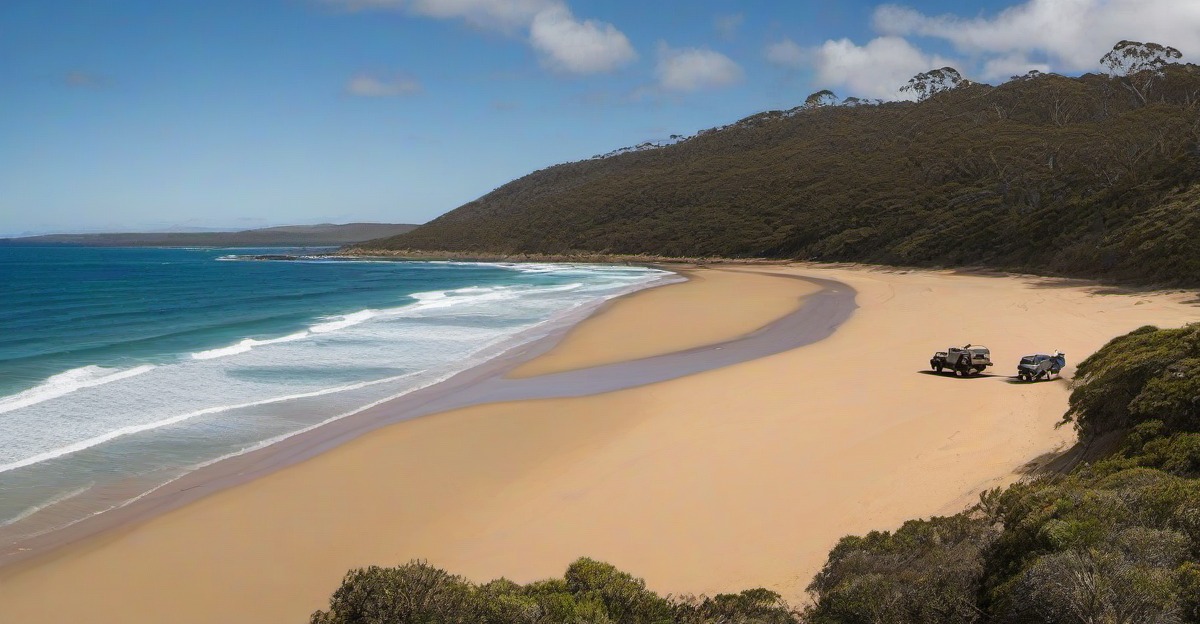
In July 2019 I stood barefoot on the Inskip sand at first light with my thongs in one hand, watching the ramp grind down into ankle-deep water and the gulls lift off the wash. Standing there, it was easy to forget that the sand on the other side is a road. That's the first thing to get straight before you load the rods: once you roll off onto the island, the beach is where you drive, park and fish, all at the same time.
K'gari is the Butchulla name for the island, and it deserves to be used. The Butchulla people's connection to this country runs through every headland and creek you pass with a rod in the tray, so fish it like the guest you are.
Paperwork comes before tackle. Queensland Parks and Wildlife Service sets out access, camping permits, track conditions and dingo rules on its Fraser Island (K'gari) page. Vehicle permits and camping bookings go through the Queensland Department of Environment's Licences & Permits service. Get both done before you drive onto the barge. The beach is policed like any other Queensland road, and a rod holder on the bull bar doesn't change that.
If you plan to fish across more than one day, our camping guide covering permits and campgrounds explains what to book.
This trip is not for anyone who wants to wander onto open sand with a rod and no plan for the tide, the permits or the traffic. If that sounds like you, read our 75 Mile Beach guide and get the basics straight first.
Reading the Gutters on a Falling Tide
The eastern beach fishes well on a falling tide. Once you're parked safely above the waterline, read the gutters and fish the edges where the current slows. It sounds simple on paper and takes practice on the sand. Walk the beach before you set up, pick one gutter, and work its edges properly. Launching every cast as far as you can into the middle misses the point.
When you want a break from the rod, the clifftop walk up to the Indian Head lookout is a short change of scenery.
Set up well clear of the driving line. The sand behind your back is still a live road while you're watching your rod tip, so keep chairs, eskies and rod spikes on the dune side of your vehicle. Kids and dogs belong there too.
The Moments That Made Shore fishing in 75 Mile Beach Worth the Trip
A good session on 75 Mile Beach comes down to timing. You want the right season for your target fish, a falling tide, and an early start before the beach gets busy with vehicles. Line those up and the beach is a pleasure to fish. Miss them and you're casting beside a busy road in the heat of the day.
Early starts pay off right across the island. In April 2021 I had Lake McKenzie to myself at first light. The water was glass, the pure white silica bottom throwing back the earliest light. A single dingo trotted along the far beach and ignored me, and by mid morning the shoreline had filled with people. Lake McKenzie has nothing to do with surf fishing, but the lesson carries straight over to the ocean beach: set an alarm.
That same sand makes life easier underfoot. The island's sand is mostly silica, which means it doesn't get blisteringly hot like darker sand beaches.
A dingo that ignores you at a lake at dawn can take a very different interest in an open bait bucket. Keep bait, burley and your catch sealed and stowed in the vehicle between casts, and follow the dingo guidance from Queensland Parks and Wildlife Service.
If you won't get up in the dark, skip the dawn plan altogether and accept a busier, noisier beach later in the day.
Tailor, Dart and Whiting Through the Seasons
Tailor run along the ocean beach through autumn and winter. Then summer brings dart and whiting to the gutters. Pick your target first and let it set your travel month.
Winter brings mild, dry weather and clear skies, though the water is cold for swimming. In autumn the weather cools down, the crowds thin out and camping conditions are good. Summer is hot and humid with afternoon storms, the mosquitoes and sandflies are at their worst, and the school holidays are busy. If tailor are the goal, pack a warm layer for those dark starts. If you're after dart and whiting in summer, pack mozzie coils and DEET spray for camp, because one without the other won't cut it.
Summer is not for anyone who can't put up with sandflies and humid, stormy arvos.
What Surprised Me About 75 Mile Beach
The tide runs the day on 75 Mile Beach, whatever your watch or your fishing plan says. Read a tide chart before you leave camp and build the session around it.
In August 2024 I was heading up past Waddy Point toward the Ngkala Rocks bypass. I read the tide chart, backed myself, and still sat in the car's shade at the northern bypass watching the swell drain off the rocks. Coming back, Eli Creek ran cold and glass-clear over my ankles, the ripples in the sand shifting under the current. Sitting it out was part of the trip.
Here's the working rule. At high tide, drive the dry sand above the waterline and take the headland bypass tracks. Plan any longer run on the eastern surf beach around low tide, so the drive and the fishing aren't fighting each other for the same patch of sand.
Treat the beach as the gazetted road it is. Speed limits, seatbelts and giving way to aircraft all apply, and the limit on the open beach is 80km/h. A tray full of rods doesn't make you a special case. The open ocean here is not for swimming either, so stay out of the surf beyond what you need to land a fish.
Weather and swell matter as much as the tide. Check the Bureau of Meteorology Queensland page for weather, swell and cyclone warnings before you head up the beach.
Pete Temple's Insider Tips for Getting It Right
Getting 75 Mile Beach right starts at the barge ramp. Engage 4x4 before you roll off, let your tyres down before you hit the sand, download offline maps, check the latest QPWS conditions report, and confirm which camping zones are open. Only then should you start thinking about rigs and bait.
Start with the drivetrain. Most modern 4WDs require manual engagement of 4x4 mode, and leaving it in 2WD is a common cause of bogging within 100 metres of the barge ramp. Don't be the driver everyone behind you on the barge watches dig in. Drop your tyre pressure before you hit the sand, not once you're already bogged. Our sand driving guide walks through the technique, and the Fraser Island 4WD requirements page covers what your vehicle needs before it goes anywhere near the ramp.
Download offline maps before you leave, since phone maps don't show the inland tracks. Read the QPWS K'gari conditions report before you cross as well. It lists road closures, beach conditions, dingo alerts and planned burns, and any of those can reshape your plans.
Camping needs a fresh look this year. Beach camping zones 9 (Diray and Carree) on K'gari are closed from June 2025 to January 2027 for rehabilitation. If a mate's old trip notes point you there, leave those zones out of any trip before the closure lifts.
Fishing rules have their own map. Look up the zones and fishing rules on the Queensland Parks and Wildlife Service Great Sandy Marine Park page before you rig up, so you know what applies where you plan to cast.
This beach is not for a first-time sand driver who plans to learn on the day. Do the reading before you pack a single rod.
What I Wish I'd Known Before I Went
A K'gari fishing trip is won or lost on preparation before the first cast. Carry a tide chart, enough drinking water, every permit you need, and a plan for dingoes, rubbish and supplies before you board the barge. Leave any of those out and you'll spend your fishing time sorting problems.
Read the tide chart the night before as well as on the morning. The wait at Ngkala showed me that reading the tide and respecting it are two separate jobs. Pack enough drinking water for the whole trip, because you can't count on a tap at camp. Keep your permits saved offline so you can show them without phone signal.
At camp and on the beach, lock away food, bait and fish. Dingoes move through campsites and they're quick. Plan to carry out everything you carry in, including bait bags and fish scraps, because rubbish facilities are limited. Don't count on buying forgotten gear or food on the island, and budget fuel generously, since soft sand driving is thirsty work.
The drive north takes you past the Maheno shipwreck, and our Maheno shipwreck guide covers the Maheno shipwreck properly if you plan to stop. Admire it from the sand, stay off it, and use a zoom lens. For the wider picture on K'gari beach-fishing access, start with our K'gari fishing access guide.
If you can't commit to that level of prep, hold off on the trip until you can. The fish will still be running the gutters when you're ready.
Explore More
Related comparisons and guides:
Frequently Asked Questions
When does the eastern beach on K'gari fish well?
The eastern beach fishes well on a falling tide. Time your walk to the sand so the drop lines up with your session, then read the gutters and fish the edges where the current slows.
Which fish can I target off 75 Mile Beach, and when?
Tailor run along the ocean beach through autumn and winter. Then summer brings dart and whiting to the gutters.
Can I camp in beach camping zone 9 on my fishing trip?
Beach camping zones 9 (Diray and Carree) on K'gari are closed from June 2025 to January 2027 for rehabilitation. Confirm the zones that are open with Queensland Parks and Wildlife Service before you plan a camp.
Why do vehicles get bogged right after the barge?
Most modern 4WDs require manual engagement of 4x4 mode, and leaving it in 2WD is a common cause of bogging within 100 metres of the barge ramp. Engage it while you're still on the barge deck so it's done before the ramp drops.
Can I drive 75 Mile Beach at high tide?
At high tide, drive the dry sand above the waterline and take the headland bypass tracks. The beach stays a gazetted road with an 80km/h limit whatever the tide is doing.
Will the sand burn my feet while I fish barefoot?
The island's sand is mostly silica, which means it doesn't get blisteringly hot like darker sand beaches. Sandflies in summer are a separate problem, so keep repellent in the tackle bag.
Written from Hervey Bay, Queensland.

Pete Temple
Hervey Bay, Queensland