Indian Head walk K'gari Fraser Island: The Clifftop Lookout
We earn a commission when you book through our links on Viator (PID P00299531), at no extra cost to you. This is how we keep the site free.
I would build an Indian Head visit around watching the water, with enough flexibility to accept whatever appears.
I Didn't Expect Indian Head (Takky Wooroo) to Feel Like This
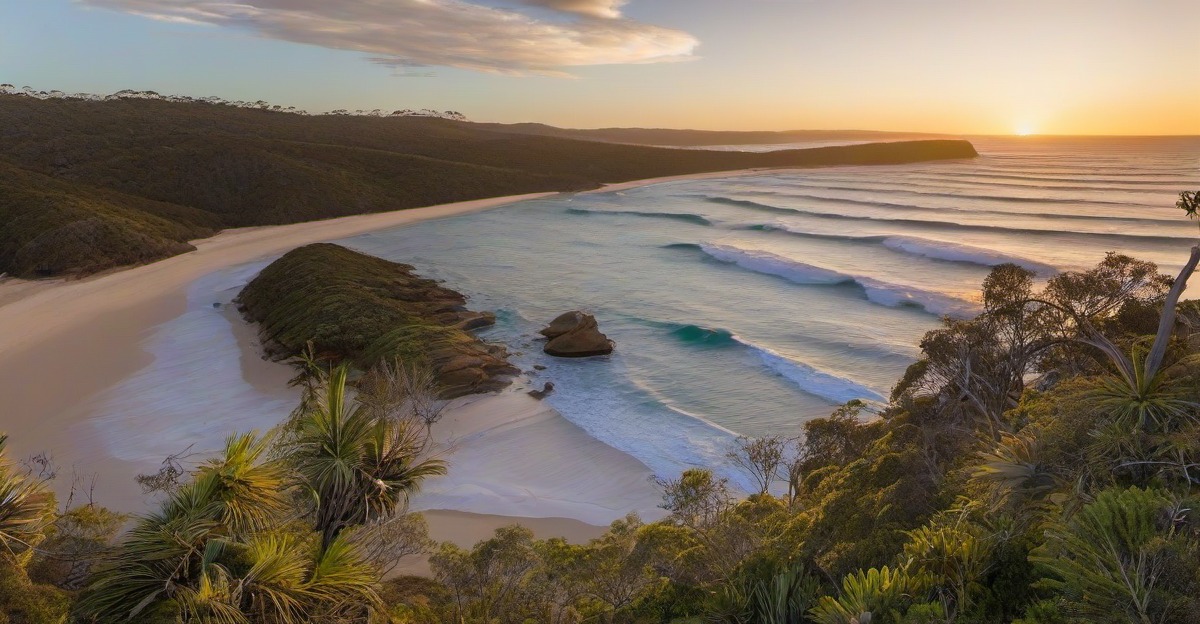
Indian Head (Takky Wooroo) is the prime vantage point on K'gari for spotting marine life from land. Sharks, turtles, and rays are visible from the clifftop on clear days. I would make water visibility central to the plan, using Queensland Parks and Wildlife Service information to check the park context before setting out.
At Indian Head in July 2024, I climbed to the lookout early with a pair of binoculars I had nearly left in the car. Manta rays moved below the surface, a turtle surfaced, and I spotted a shark. Beside me, a German couple without binoculars saw blue water.
I would rather spend my attention following a shape beneath the surface than deciding whether the photograph needs another attempt.
My sighting belongs to that visit; it does not establish what you will see. I would still want the headland in the plan, but I would judge the stop by the chance to observe, not by a wildlife tally.
K'gari (Fraser Island) Day Tour - From Rainbow Beach: The Tour That Saved My Trip
For someone already in Rainbow Beach, I would consider this guided option for its purpose-built vehicle and island focus. The supplied description includes the sandy highway and rainforest, with Lake McKenzie identified in the product guidance.
Indian Head is not named in that description. If the lookout is your reason for paying, ask the operator whether the itinerary includes it before committing. I cannot attach the promise in this heading to a personal booking: my supplied experience here concerns the lookout, not this tour.
The Moments That Made Clifftop views in Indian Head Worth the Trip
I would treat the lake and the lookout as separate booking priorities.
At Lake McKenzie in April 2021, I had the place to myself at first light. The water was glass, the pure white silica bottom throwing back the earliest light. A dingo trotted along the far beach and ignored me. Later that morning, people filled the shoreline.
My memory is about the change in atmosphere, not a promise that an alarm clock buys solitude.
Lake Boomanjin gave me another very specific memory in October 2022. I arrived at ten in the morning on a Saturday in perfect weather, and the car park held one other vehicle, a couple from Germany who had been there since seven. I waded into tea-coloured water and watched a sea eagle circle above.
I would not turn that Saturday into a claim about visitor numbers today. What it tells me about my own preferences is simple: I value space to notice things.
K'gari (Fraser Island) All Inclusive Day Tour: A Lesser-Known Tour Worth Discovering
This product names Central Station, Wanggoolba Creek, Lake McKenzie, Eli Creek and the Maheno shipwreck. I would consider that line-up for a first visit focused on the island sights listed in its description.
My recommendation rests on the places listed, not on the heading's implication of exclusivity or an experience I have not supplied.
What Surprised Me About Indian Head (Takky Wooroo)
Water clarity and whale season answer different planning questions: one concerns what you can distinguish below the lookout, while the other concerns a regional wildlife calendar. I would not treat either as a guarantee. The Bureau of Meteorology's Queensland information is where I would check weather before finalising the outing.
Hervey Bay's whale watching season runs July to October and is one of the Fraser Coast's main drawcards alongside K'gari. That supplied seasonal context is not a promise of whales from Indian Head, and it does not establish the operating calendar of any tour featured here.
I would use the whale-watching guide to think through a dedicated outing, then consult the seasonal wildlife guide when deciding what matters across the wider trip.
Butchulla context belongs in that decision-making too. The supplied laws put care for the land first:
The Butchulla people's three laws: what is good for the land comes first
do not touch or take anything that doesn't belong to you
if you have plenty, you must share
I take those words as a reason to approach K'gari with restraint. Takky Wooroo is not merely a place to collect a photograph. I would listen to Butchulla interpretation where it is offered, without pretending that my interest in wildlife gives me authority to explain someone else's culture.
Pete Temple's Insider Tips for Getting It Right
I would plan the northern run around confirmed access and current conditions, not an assumed beach-driving window. Start with the official K'gari park information before deciding how the lookout fits.
Put the beach route and any Champagne Pools visit on the same planning sheet. My beach-driving guide provides related reading, but it cannot replace current official advice. I would not supply a tide time without a date-specific source, or translate seawater entering a pool into permission to swim.
For weather decisions, consult the Bureau of Meteorology.
I would also put permit bureaucracy ahead of the enjoyable planning. Use the Queensland licences and permits information to establish what your vehicle and camping plans require. A tour booking should prompt a different question: which arrangements does the operator handle, and which remain yours?
My packing decisions would cover drinking water, food, sun protection and insect protection. Sandflies belong on the list of things I would prepare for, alongside the camera. An esky with something you want to eat sounds a better proposition to me than making the whole arvo depend on a particular bakery item.
At Eurong Bakery in July 2023, I got to the bakery before eleven and the pepper pie I wanted was already gone, along with the sausage rolls and the vanilla slice. I took the last plain meat pie and a flat white. That experience is enough to make me pack a backup lunch; it is not a current stock timetable.
What I Wish I'd Known Before I Went
The supplied product descriptions do not explicitly promise Indian Head, so I would make itinerary confirmation the booking decision.
My practical booking checklist starts with the reason for going. Write “Indian Head lookout” in your enquiry if that is the priority. Ask what happens if the proposed stop cannot proceed, and read the cancellation terms before you pay.
I would use the visit-timing guide to weigh the trip as a whole, then check my priorities against the specific itinerary.
K'gari (Fraser Island) Explorer 2-Day Tour
The supplied product guidance identifies hotel rooms at K'gari Beach Resort and additional sights such as Lake Wabby. I would consider this format if sleeping in a hotel on the island appeals.
Dingos 2 Day K'Gari (Fraser Island) 4WD Tag-Along Tour
This product describes a self-driven experience from Rainbow Beach, following an experienced guide. I would consider it for someone who actively wants the driving element. Ask about driver eligibility and responsibilities before booking, because the supplied description does not settle those details.
My Indian Head memory began with binoculars I nearly left behind.
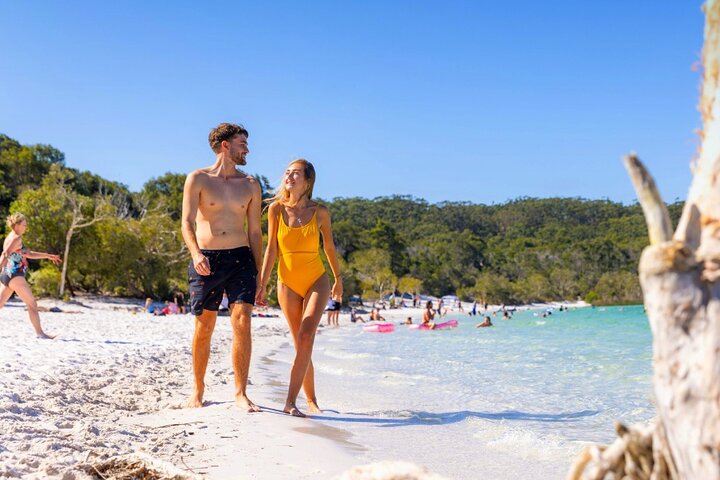
K'gari (Fraser Island) Day Tour - From Rainbow Beach
From A$299 · Price checked: Sep 2026
Best for: Travellers already at Rainbow Beach who want a guided 4WD day on the sand highway and Lake McKenzie.
Not for: You must reach Rainbow Beach yourself, so skip it if you are based in Hervey Bay without your own transport.
Explore the beauty of Fraser Island on a full-day tour from Rainbow Beach by purpose-built 4WD vehicle. Discover what makes the island a World Heritage-listed site with an experienced and passionate guide. Travel along the sandy highway; see ancient rain forests and marvel at the crystal clear Lake McKenzie.
Check availabilityExternal booking on Viator · pricing and cancellations handled by Viator
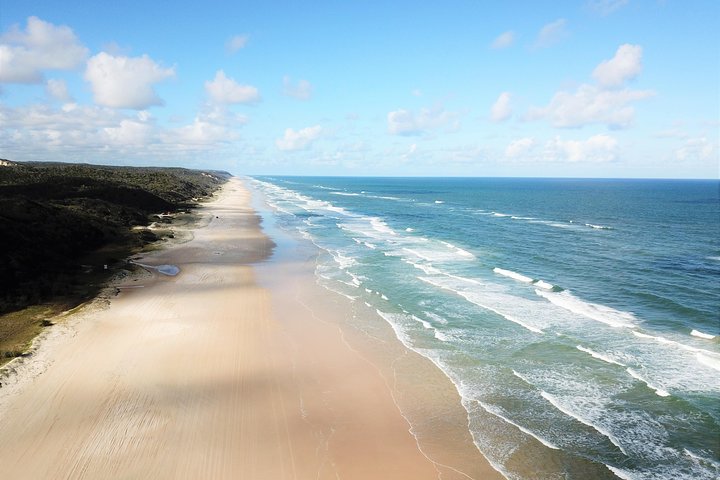
K'gari (Fraser Island) All Inclusive Day Tour
From A$279 · Price checked: Sep 2026
Best for: First time visitors who want the main K'gari sights, Lake McKenzie, Eli Creek and the Maheno, in one guided day.
Not for: It runs 9 hours across many stops, so skip it if you want a slow pace or an early finish.
Spend an incredible day exploring the natural beauty of K'gari (Fraser Island), seeing highlights such as Central Station, Wanggoolba Creek, Lake McKenzie, Eli Creek, 75 Mile Beach, and the Maheno shipwreck. The island is a natural treasure chest with an abundance of animals and plant life.
Check availabilityExternal booking on Viator · pricing and cancellations handled by Viator
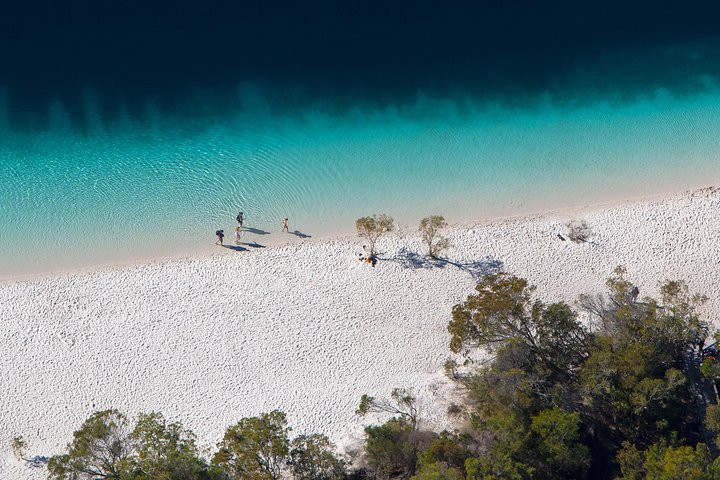
K'gari (Fraser Island) Explorer 2-Day Tour
From A$549 · Price checked: Sep 2026
Best for: Travellers wanting more than a day trip: two days, hotel rooms at K'gari Beach Resort and extra sites like Lake Wabby.
Not for: Groups run to 30 guests, so skip it if you want a small group or cannot commit two days and a night away.
Explore the World Heritage-listed sights of Fraser Island on an award-winning two-day tour! K'GARI 2-DAY TOUR - This new tour represents the strong value experience on Fraser Island!
Check availabilityExternal booking on Viator · pricing and cancellations handled by Viator
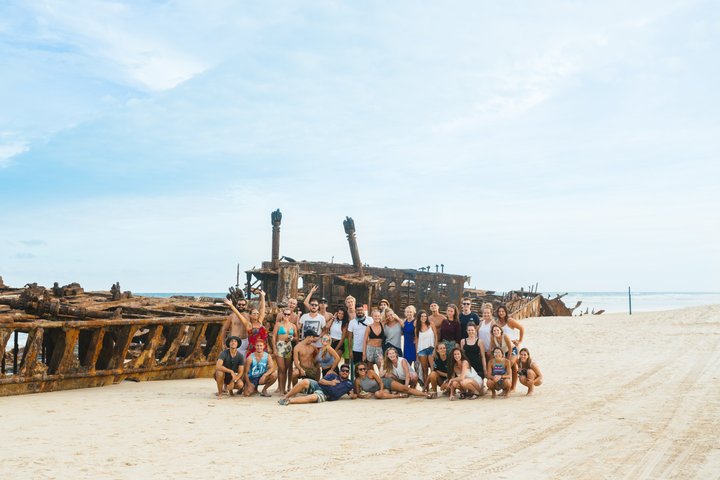
Dingos 2 Day K'Gari (Fraser Island) 4WD Tag-Along Tour
From A$549 · Price checked: Sep 2026
Best for: Drivers with two days who want the self drive 4WD experience from Rainbow Beach with a lead guide vehicle.
Not for: Two days is tight for the island and you must drive yourself, so it suits neither nervous drivers nor slow travellers.
Dingo's K'gari Adventures is a fun-filled, self-driven two-day adventure that allows you to experience all the highlights of K'Gari (Fraser Island) by 4WD.
Check availabilityExternal booking on Viator · pricing and cancellations handled by Viator
Explore More
Related comparisons and guides:
Frequently Asked Questions
Can I book these tours specifically for a photography outing?
The supplied descriptions do not establish a photography-focused format. I would ask whether the itinerary allows the kind of patient observation your photography needs.
Should I assume a tag-along booking lets me drive?
I would distinguish joining the trip from being approved as a driver. Ask the operator to confirm your eligibility against its booking requirements.
Does a hotel-based tour include a private room?
The supplied guidance mentions hotel rooms but does not specify your room allocation. Confirm occupancy and bedding before treating the accommodation as a match.
Can the information here establish whether the walk suits my mobility?
No supplied fact establishes the walking surface, gradient or assistance available. I would describe my mobility needs to Queensland Parks and Wildlife Service and the operator before booking.
Should I choose a tour solely because its title says all inclusive?
I would request an itemised statement of inclusions and exclusions. A title does not answer individual questions about meals, equipment or transfers.
Written from Hervey Bay, Queensland.

Pete Temple
Hervey Bay, Queensland