Eighty Million Litres a Day, Pure Enough to
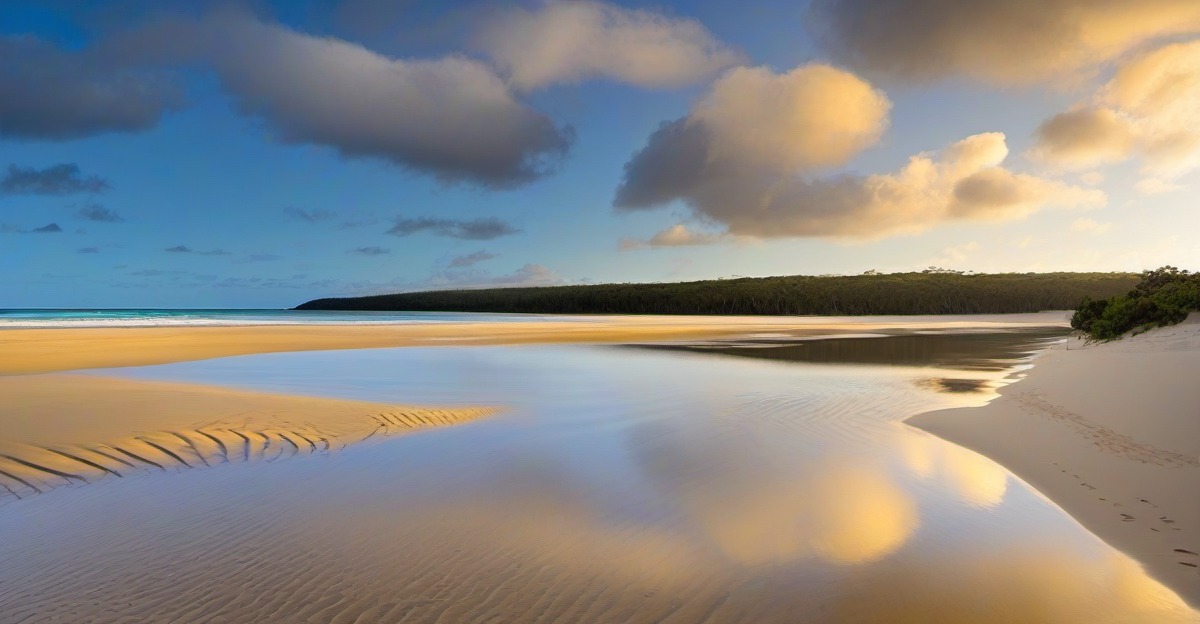
Eli Creek is the largest freshwater creek on Fraser Island (K'gari) If you want to try it, I recommend the Fraser Island Full Day 4Wd Tour.. It runs off the eastern dunes, crosses Seventy Five Mile Beach, and empties 80 million litres of freshwater into the ocean every day. That is a number worth sitting with for a moment. The average Australian household uses about 700 litres a day. Eli Creek puts out more than 100,000 households worth of freshwater every 24 hours.
ater every 24 hours.The water is filtered through sand for 100 years before it reaches the creek. It is pure enough to drink at the head of the creek. That is not marketing. That is the actual geology. The sand on Fraser Island is around 100 metres deep in places. Rainwater falls on the island, drains down through the sand, takes the slowest possible route to sea level, and emerges at the creek mouth filtered clean by a century of slow percolation through silica.
At the head of the creek, where the water emerges from the dune vegetation, it is as pure as any natural water you will find. Drink it there if you want. I have. It tastes of nothing, which is exactly what pure water should taste like. Do not drink it downstream. That is the honest version of the same advice. 400,000 visitors a year means 400,000 sunscreen applications, 400,000 insect repellent washes, and a slow accumulation of everything else tourists carry into a creek. By the time the water reaches the beach it has been used as a swimming spot, a wading area, and a washing point by every visitor that day. Treat it as if you were swimming at any popular inland swimming hole. Do not drink it.
We earn a commission when you book through our links on Viator (PID P00299531), at no extra cost to you.
Most visitors reach Eli Creek on a guided day tour from Hervey Bay. The full-day format covers the barge crossing, Central Station, Lake McKenzie, the Maheno shipwreck, Eli Creek, and the coloured sands at The Pinnacles. The tour I usually recommend for first-timers is the Fraser Island Full Day 4WD Tour, which stops at Eli Creek on the way back along Seventy Five Mile Beach and gives you enough time to walk the boardwalk and float the creek.Float the Creek: Bring an Inflatable Ring
The single most fun thing to do at Eli Creek is float down it on an inflatable ring. Most visitors do not realise you can, walk in at the bridge near the car park, and float the 200 metres down to the mouth where the creek meets the beach. The current does the work. You do nothing except lie back and watch the rainforest canopy pass overhead.
You can hire an inflatable ring at the kiosk near the car park. The hire cost is small. The rings are simple plastic pool toys, not serious river tubes, and they pop if you drag them over sharp sticks or rocks. Most visitors get one full float out of a hire ring before it needs replacing. If you have your own inflatable ring, bring it with you. The day tour buses do not supply them, and the kiosk sometimes runs out by mid-morning in peak season.
If you do not want to float the creek, you can walk the 800 metre boardwalk loop through the tea-tree and pandanus lined banks instead. The boardwalk is well maintained, mostly flat, and shaded. It is a good option for anyone who does not want to get wet, anyone with kids who cannot manage a current, and anyone who wants to actually look at the creek rather than float down it.
The Creek Crossing That Flooded a Hire 4WD
There is a creek mouth at Eli Creek where the water crosses Seventy Five Mile Beach. The signposted crossing for vehicles is on firm sand further up the beach, not at the mouth itself. That distinction matters, because the mouth of the creek shifts with the tide, and the sand on either side of the mouth can be soft, wet, and unstable under vehicle weight.
This is where one hire 4WD flooded, in case I have mentioned it before. The driver tried to cross the creek mouth at the wrong tide instead of parking on the firm sand and walking in. Saltwater in a drivetrain is not a small repair. The recovery bill for that mistake ran into five figures. The driver was fortunate the hire insurance covered it. Most do not.
The rule at Eli Creek, and at every creek crossing on Fraser Island, is that you walk it first. Step into the water. Feel the bottom. Check the depth against your vehicle's air intake. Check the firmness of the sand on the other side. Then decide whether to drive across or park and walk.
What to Bring to Eli Creek
Sunscreen, water shoes, and a towel. In that order. The water is shallow enough that you can wade the whole way without swimming, but a towel is the one item people consistently forget.
Sunscreen first. The creek is shaded in places but open in others, and the Australian summer sun reflects off both the water and the sand. Reef-safe sunscreen is now required on Fraser Island. Standard chemical sunscreens containing oxybenzone or octinoxate are restricted because they damage the freshwater ecosystems downstream. Pack a reef-safe formula before you drive onto the island. The kiosk sells them at a markup.
Water shoes second. The creek bed is mostly fine sand but there are patches of smooth stone where the water has washed it clean. Bare feet are fine but you will be walking back to the car with sand between your toes for the rest of the day. Water shoes or cheap reef boots are easier.
A towel third. Yes, you brought one. Most visitors under-pack towels for the creek float. The clothes you wear down the creek are wet. The clothes you change into are damp from the humidity. You want two dry towels for the trip home.
Bring water. There is no drinking water at the creek. The freshwater flowing past you is technically drinkable at the head, but the kiosk and the boardwalk do not have tap water, and you will be in the sun for at least an hour. A refillable bottle from the day tour or your own supply is essential.
Best Time to Visit Eli Creek
The morning is calmer than the afternoon. The water is clearer before the daily visitors have walked the sand into suspension. The light catches the tea-tree lined banks with the sun behind you, which is what you want for photographs.
By early afternoon the creek mouth is at its busiest. Day tour buses arrive in waves through the morning and the floats overlap. The current slows a little as the creek mouth widens with the rising tide. By late afternoon, the tour buses have left and the creek is quiet again, but the light has gone.
Late afternoon in shoulder season, when the day tours have thinned, is the best Eli Creek you will see. Calm water, low crowds, warm light, and empty boardwalks. The trade-off is that you are on the second half of a long day and you have already done Lake McKenzie and the Maheno. Most visitors are tired by then. If your energy holds, late afternoon is the magic hour at Eli Creek.
Dingo Safety at the Creek Mouth
Fraser Island dingoes are wild, semi-pure, and dangerous. They are present on the beach at the creek mouth and on the inland tracks. They are also protected. Keep food in your vehicle. Do not eat on the beach. Do not feed a dingo, ever, not even a small piece of bread. The park rangers have euthanised dingoes that have become aggressive, and every incident makes the next one more likely.
If a dingo approaches you, stand up, face it, and back away slowly. Do not run. Do not turn your back. Do not crouch down or pretend to play. Carry a stick if you have one. Make yourself look large. Move back to the boardwalk or the car park without turning away from the animal.
The boardwalk between the car park and the creek is where most dingo encounters happen. Walk in groups. Keep small children close. Do not leave food in bags on the ground. The dingoes have learned to associate bags with food, and they will take a bag before you can react.
Book a Tour That Stops at Eli Creek
Common Questions
Can you swim in Eli Creek?
Yes. It is one of the most popular swimming spots on Fraser Island. The water is fresh, shallow, and clear at the head of the creek. The creek mouth is where the freshwater meets the ocean and is the most popular spot for swimming, wading, and floating.
How much water does Eli Creek put out?
Around 80 million litres a day, fed by rainwater filtered through the island's sand dunes over about 100 years. It is the largest freshwater creek on Fraser Island.
Can you float down Eli Creek?
Yes. Most visitors float the 200 metres from the bridge near the car park down to the creek mouth on an inflatable ring. You can hire a ring at the kiosk, or bring your own. The current does the work.
Is the water at Eli Creek safe to drink?
At the head of the creek, where the water emerges from the dunes, yes. It is filtered through 100 metres of sand and is rainwater. Downstream, where 400,000 visitors a year swim, sun themselves, and apply sunscreen, no. Treat the creek mouth water as you would any popular swimming spot.
How long do you need at Eli Creek?
Around 90 minutes is enough to walk the boardwalk, float the creek, and have a swim. The day tour buses stop for around 60 to 90 minutes. If you have your own vehicle and you want the creek to yourself, late afternoon on a non-school-holiday weekday is the quietest window.
Explore More
Related guides and comparisons: