What Lake Mc
Lake McKenzie is a perched dune lake sitting roughly 120 metres above sea level on the eastern side of Fraser Island, known to the Butchulla people as K'gari If you want to try it, I recommend the Fraser Island Full Day 4Wd Tour.. It is one of more than 40 perched lakes on the island, which is more than anywhere else on earth. Perched means it sits on a layer of organic matter and sand so tightly packed that water cannot drain down through it. The lake is filled only by rain. There are no streams feeding it. There are no rivers running into it. There is no groundwater seepage from the ocean. Every drop you swim in has fallen out of the sky and been filtered through sand for thousands of years.
thousands of years.Because there is no inflow and no outflow, nothing lives in the water. There are no fish. There are no leeches. There are no crocodiles. There are no worms at the bottom. The water is acidic, stained lightly with tannins from the surrounding vegetation, and pure in a way that very few natural bodies of water on earth can match. The clarity is the part that catches people. The water is so clear it looks 1 metre deep when it is actually 5 metres. I have watched adults refuse to walk out beyond knee height because their brain insists the bottom is right there. It is not. The drop-off is gradual, the sand is soft, and you can wade out 30 metres before it reaches your chest.
The Sand: Pure Silica, and Why It Matters
The beach at Lake McKenzie is not regular beach sand. It is almost pure silica, which gives it the brilliant white colour and the soft, flour-like texture that photographs so well. Walk on it barefoot and you will feel the difference immediately. Walk on it every day for a week and your skin will tell you what silica is doing. The grains are fine, hard, and slightly abrasive. They exfoliate dead skin off your feet, heels, and shins without you having to do anything. It is the closest thing to a free spa treatment you will find on K'gari.
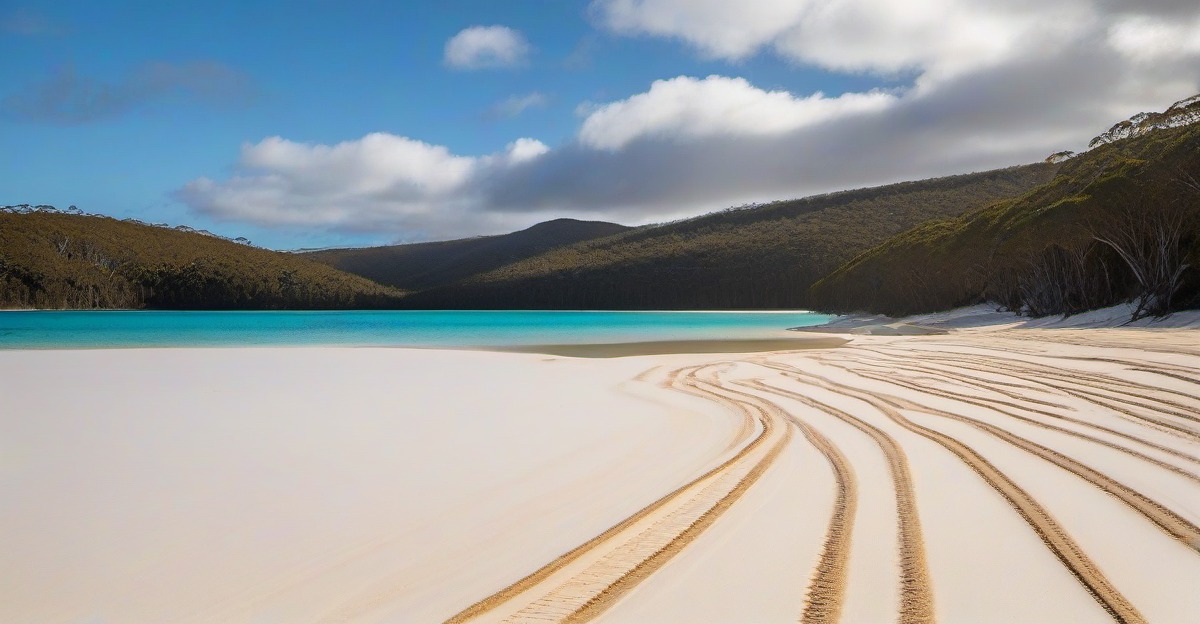
The sand is also the reason the lake looks the colour it does. White sand reflects sunlight back up through the water, which is what gives Lake McKenzie its famous turquoise and aqua tones. The colour shifts through the day as the sun moves. Around midday, when the sun is overhead, the lake turns a deeper blue. In the late afternoon, with the sun lower, the shallows glow green. This is real. It is not a filter. It is the same physics that makes tropical seas look the way they do, just without the salt.
Best Time to Visit: Before 10 am, Not After
Fraser Island gets more than 400,000 visitors a year, and most of them want to see Lake McKenzie. Day tour buses start arriving from Hervey Bay and Rainbow Beach at roughly 10 am and run through to about 2 pm. By noon, the main beach strip and the boardwalk around the lake are crowded. The car park fills up. The toilets queue. The two main swimming spots are busy.
If you can get there before 10 am, you will have the place almost to yourself. The morning light is also better for photographs. The water is calmer because the wind has not picked up. The temperature is comfortable. The dingo activity is lower. And you will be out of the parking lot before the first bus pulls in.
The lake is open to day visitors, but you will need a 4WD to reach it. The inland track from Central Station to Lake McKenzie is soft sand, single lane in places, and not suitable for a regular car. Most visitors come on a guided day tour from Hervey Bay, which handles the driving, the barge crossing, the permit, and the timing for you. If you want the lake to yourself and you have a high-clearance 4WD with proper sand-driving experience, an early self-drive is the best option. If you do not have both, book the tour.
What to Bring (and What the Tours Do Not Tell You)
You need three things at Lake McKenzie, in order of importance: sunscreen, water, and insect repellent.
Sunscreen first. The silica sand reflects sunlight so efficiently that it doubles your UV exposure. You can burn in 20 minutes on a partly cloudy day if you are not wearing SPF 50. Reapply every two hours. A wide-brim hat is not optional if you are fair-skinned. The reflection off the white sand is what catches people out. They think they are covered because they are in the water, but the lake is shallow enough to stand in much of the swimming area, and the surface is bouncing UV straight up at your face and shoulders.
Water second. There is no drinking water at the lake. The tap water at the day-use area is not potable. Bring at least 2 litres per person for a half-day visit. You will be walking on hot sand in direct sun, and dehydration sneaks up on you faster than you think. The tours supply lunch and water, but if you are driving yourself, pack more than you think you need.
Insect repellent third. In summer (December to February), the lake shore gets sandflies and mosquitoes in the late afternoon. The bushland around the car park is where they breed. Cover up before dusk or you will be scratching for a week. Repellent with DEET or picaridin works. The natural ones do not.
What You Cannot Do (and Why)
Do not take the sand. It is illegal, and every grain removed adds up across 400,000 visitors a year. You will see people filling bottles and zip-lock bags at the main beach. They are stealing from a national park. The silica sand at Lake McKenzie is the reason the lake looks the way it does, and the lake itself is the reason the island is on the World Heritage list. Take a photograph. Leave the sand.
Do not feed the dingoes. Fraser Island dingoes are wild, semi-pure, and dangerous. They will steal food from bags, tents, and hands. The park rangers have euthanised dingoes that have become aggressive, and every incident makes the next one more likely. Keep food in your car. Do not eat on the beach. If a dingo approaches you, stand up, face it, and back away slowly. Do not run. Do not turn your back.
Do not swim with soap, shampoo, or insect repellent on your skin. The lake has no outflow. Anything you put on your body stays in the water. Shower before you swim if you can, or rinse off at the day-use area afterwards.
Tours That Include Lake McKenzie
Common Questions
Can you swim in Lake McKenzie?
Yes. It is the main reason people visit. The water is pure rainwater with no salt, no chlorine, and no marine life. The pH is mildly acidic, which is why nothing grows in it. It is safe to swim, safe to get in your mouth, and safe for kids.
Is Lake McKenzie fresh water or salt water?
Fresh, and pure. There are no streams feeding it, so the only inflow is rain. The level fluctuates with the seasons. In dry years the lake drops noticeably. In wet years it overflows the eastern beach and runs down through the dunes.
How long do you need at Lake McKenzie?
Two to three hours is enough. The day tours stop for around 90 minutes, which is tight but workable. If you are driving yourself, give it the full morning and combine it with a walk to the lookout on the eastern side.
Are there toilets and showers?
There are composting toilets at the day-use area. There are no showers. Rinse off in the lake if you need to.
Can you drive a 2WD to Lake McKenzie?
No. The inland track is soft sand and requires a high-clearance 4WD with low tyre pressures. A regular car will get bogged within the first kilometre. This is one of the spots where the hire-car insurance explicitly excludes you.