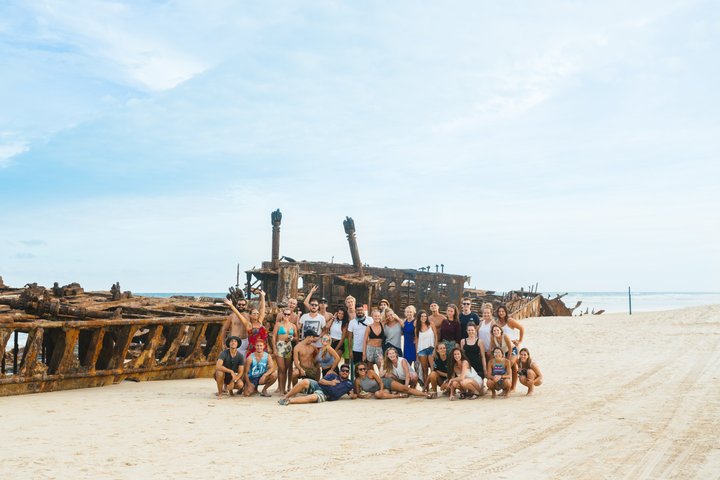
Fraser Island Camping — A Complete Guide
Four official campgrounds, two permits, and a hundred ways to get it wrong. Here's what actually matters.
Explore More
Related comparisons and guides:
What camping on Fraser Island actually involves
Fraser Island camping is a managed, permit-based system across four official Queensland National Parks campgrounds — it's not free camping, it's not glamping, and it's not something you can wing on arrival. You need a vehicle access permit ($55.90 for up to one month) to get your 4WD onto the island, and a separate camping permit (~$6.85 per person per night) for a designated site. There is no free camping anywhere on K'gari. Rangers patrol the campgrounds daily and fines for camping without a permit start at $312.
Each campground has a different character. Central Station is the social hub with hot showers and a camp kitchen. Lake McKenzie (Boorangoora) puts you next to the island's most famous perched lake — but with pit toilets and cold showers. Waddy Point is properly remote: no phone reception, basic facilities, and the sound of the Pacific as your only company. Dundubara sits in the middle, with good facilities and dingo-fenced areas that make it the safest pick for families with young kids.
I've camped at all four Fraser Island campgrounds across more than a dozen trips, in every season. My first proper stay was at Central Station in July 2018 — I crossed on the River Heads barge with a borrowed Pajero and a tent I'd bought from an outdoor shop in Hervey Bay the day before. The temperature dropped to 6°C that night. I'd brought a summer sleeping bag because I assumed Queensland meant warm. By 3am I was wearing every piece of clothing I owned, including two pairs of socks. I've never made that sleeping bag mistake again.
How do the four campgrounds compare?
Central Station — the social hub with facilities
Central Station is the most developed campground on the island. Flush toilets, hot showers, a laundry, a small shop, and a camp kitchen with gas barbecues. It's the most sociable option — expect to share the kitchen with backpackers, families, and grey nomads. The campground sits in the rainforest about 10km inland from the eastern beach, which means you're protected from the wind but also from any sea breeze on hot nights.
The downside is that Central Station is the busiest campground. In school holidays it feels like a small town. The sandflies at dusk are intense — I pitched my tent at 4pm one January arvo in 34°C heat with 90% humidity. By 5:30pm my ankles were covered in raised, itchy welts that lasted ten days. I had DEET in the car but thought "I'll just be a minute." Sandflies don't need a minute. Apply repellent before you leave the car.
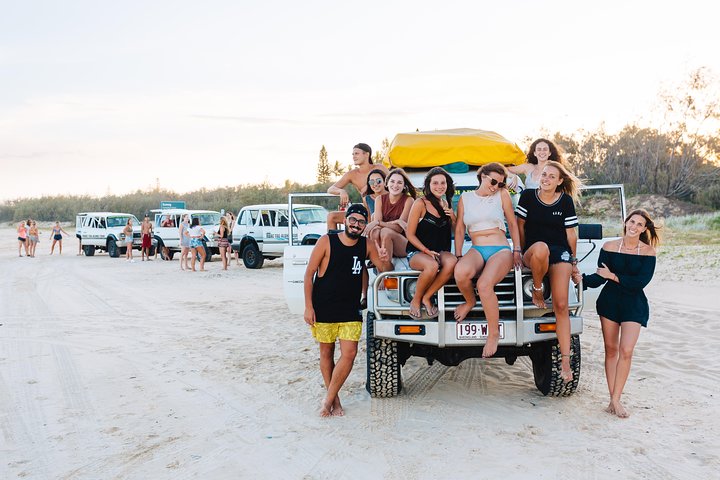
Lake McKenzie (Boorangoora) — the iconic one
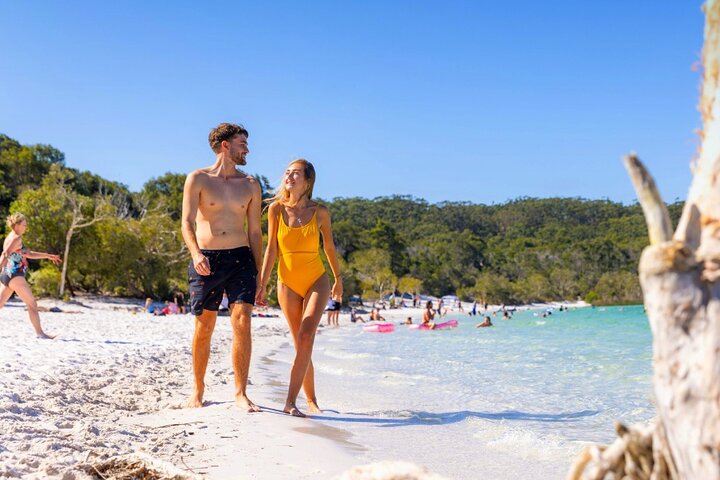
Camping near Lake McKenzie puts you walking distance from the island's most photographed landmark — a perfectly clear perched lake with pure white silica sand. The campground itself has pit toilets and cold showers only. That's it. You're trading facilities for location.
Lake McKenzie at 7am on a Tuesday in February is a different place from Lake McKenzie at 11am on a Saturday in school holidays. By midday the shoreline looks like Bondi Beach — if you want it to yourself, go early or go in the wet season. Walk 200 metres along the shore from the main entry point and the crowd thins dramatically.
Waddy Point — the remote option
Waddy Point is at the northern end of the island, past the Ngkala Rocks bypass. It has basic pit toilets and cold water only. No phone reception. No camp kitchen. No shop within an hour's drive. I spent three days here in June 2022 and saw exactly four other people. Just the sound of the Pacific and the occasional dingo padding through camp at dawn. It's not for everyone, and that's the point.
The fishing off Waddy Point is serious — tailor, dart, and whiting off the beach, with gutters that form reliably on the incoming tide. But you're on your own if something goes wrong. Vehicle recovery from Waddy Point costs $500-800 and you'll wait 4-6 hours for a tow truck from Eurong.
Dundubara — the family pick
Dundubara has flush toilets, hot showers, and dingo-fenced camping areas that make it the safest option for families with young children. It sits roughly halfway up the eastern beach, giving you decent access to both the southern lakes (McKenzie, Birrabeen) and the northern attractions (Champagne Pools, Indian Head). The campground is large enough that you're not on top of your neighbours but compact enough that the facilities are convenient.
What should you bring that most people forget?
Beyond the tent and sleeping bag, here's what makes the difference between a comfortable trip and a miserable one on Fraser Island:
- DEET-based repellent AND mozzie coils. One isn't enough. The sandflies at Central Station are relentless from December to February.
- At least 5 litres of drinking water per person per day. There's no tap water at most campsites. Don't count on buying it — the shop at Eurong runs out in peak season.
- A tide chart or offline tide app. You cannot drive on 75 Mile Beach two hours either side of high tide. Getting caught out means waiting on soft sand above the high-tide line, sometimes for hours.
- A snatch strap and rated recovery points. Not a tow ball — tow balls snap under snatch loads and become lethal projectiles. I learned this the hard way on the inland track after 80mm of overnight rain in February 2023. The track was a series of mud holes the size of bathtubs. We winched twice. Two cars behind us gave up and turned back.
- Offline maps downloaded before you go. Google Maps doesn't have the inland tracks. Once you're past Eurong, phone reception is patchy even on Telstra. Optus and Vodafone barely work at all.
Which mistakes do most first-timers make?
Arriving without permits
You need two separate permits: a vehicle access permit and a camping permit. Rangers check daily. The fine for camping without a permit is $312. The fine for driving without a vehicle access permit is higher. Book both at qpws.permits.qld.gov.au — the system opens bookings in rolling 6-month windows.
Not booking far enough ahead
Central Station sells out within days of bookings opening for school holiday periods. Book six months ahead if you're travelling in Queensland school holidays, Christmas, or Easter. For August-September whale watching season, book at least three months ahead.
Driving at high tide
75 Mile Beach is a registered highway with an 80km/h speed limit and police patrols — but it's also a beach that disappears at high tide. Driving two hours either side of high tide means you'll either lose your vehicle to the ocean or get stranded above the tide line. Check the tide times before you plan any beach driving.
Underestimating fuel consumption
Soft sand driving uses roughly twice as much fuel as highway driving. Fuel at Eurong and Happy Valley costs $2.40-2.80 per litre. Fill up in Rainbow Beach or Hervey Bay before you leave. The IGA in Rainbow Beach is the last decent supermarket before the barge — stock up there, not at the servo.
Leaving food unattended
Dingoes patrol the campgrounds regularly and they're fast. "Supervised" means eyes on your food every single second. I turned my back on a camp table at Waddy Point for maybe 30 seconds — turned around and a dingo was 50 metres into the scrub with my breakfast in its mouth. It didn't run. It didn't panic. It walked off like it owned the place. Which, on K'gari, it kind of does. The fine for improperly stored food is $312.
Who is Fraser Island camping for — and who should skip it?
Camping is right for you if:
- You have (or can rent) a proper 4WD and you're comfortable driving on sand
- You're happy with basic facilities — cold showers, pit toilets, no power
- You want the full Fraser Island experience on your own schedule
- You're prepared to carry out everything you carry in — rubbish facilities are limited
Camping is probably not for you if:
You don't have a 4WD and don't want to rent one. Without a 4WD, independent camping isn't possible. Every campground is accessed via sand tracks. If you still want to camp on the island, your only option is a guided tag-along tour that includes camping — the operator handles the vehicle, permits, and logistics. The Dingo's 3-Day Tag-Along is the best-value camping tour option.
You're visiting in mid-summer (December-February) and hate insects. The wet season brings afternoon storms, 90% humidity, and sandflies that will make you miserable if you're not prepared. I camped at Central Station in January 2023 and the combination of heat, humidity, and insects was properly unpleasant. If you're set on summer, book Dundubara — the dingo fence helps with insects slightly, and the coastal breeze makes a difference. Otherwise, do a day tour from Hervey Bay and sleep in air conditioning.
You want resort comfort. Kingfisher Bay Resort charges $280-450 per night for a standard room in peak season and you can't take a vehicle on their pedestrian-only barge — you're stuck at the resort unless you've booked tours. Camping costs $6.85 per person per night. There is no middle ground on Fraser Island — it's either the resort or the campgrounds. Nothing in between.
When should you go camping on Fraser Island?
Winter (June-August): The best weather window — 14-22°C, dry, clear skies. Humpback whales passing off the coast. Water is cold for swimming but the lakes are still swimmable. Bring a warm sleeping bag — inland temps at Central Station can drop to 6°C at night even in Queensland winter.
Spring (September-November): Warming up, wildflowers blooming, whale season peak in September-October. My pick for the best all-round camping window. The weather is stable, the crowds haven't hit summer peaks yet, and the whales are still active through October.
Summer (December-February): Hot and humid with afternoon storms. The mosquitoes and sandflies are at their worst. School holidays mean every campground is full. The inland tracks wash out after heavy rain — I did the Central Station to Lake McKenzie track in February 2023 after 80mm of overnight rain and it took four hours instead of the usual 45 minutes.
Autumn (March-May): Cooling down, fewer crowds, good camping weather. March can still be wet but by May the dry season pattern has set in. The dingo population doubles during breeding season (March-May) — they're more active, more territorial, and more likely to approach campsites. Be extra vigilant with food storage.
Tours that include camping on Fraser Island
If you don't have your own 4WD or don't want to deal with permits, these guided tours include overnight camping on the island:
Dingos 3-Day Tag-Along Fraser Island 4WD Adventure
The best-value way to see Fraser Island if you don't have your own 4WD. Three days of camping, driving, and swimming with a group of 20-30 people. The guide quality varies — if you get one of the older, long-term guides, it's a proper education in the island's ecology. If you get a newer guide, it's more of a party trip.
Best for: Budget-conscious backpackers and solo travellers who want the full Fraser experience
Dingos 2-Day Premium Fraser Island 4WD Safari
The 3-day version's shorter cousin. Two days instead of three means you cut either Lake McKenzie or the Champagne Pools. You get the camping and the 4WD experience but it feels rushed. Only worth it if you honestly can't spare three days — but honestly, do the 3-day if you can.
Best for: Tight schedules who still want a taste of camping
Fraser Island Day Tour from Hervey Bay
Not a camping tour — but the path of least resistance if you want to see the highlights without sleeping on the ground. A comfortable 4WD bus takes you to Lake McKenzie, Central Station, Eli Creek, and the Maheno in one packed day. You get about 45 minutes at each stop. Sleep in Hervey Bay and let someone else do the driving.
Best for: Time-poor visitors, families with young kids, anyone nervous about driving on sand
Frequently asked questions about Fraser Island camping
Do I need to book camping permits in advance?
Yes. Camping permits are booked through QPWS at qpws.permits.qld.gov.au. The system opens bookings in rolling 6-month windows. For school holiday periods, Central Station sells out within days. For August-September, book 3-4 months ahead. You cannot turn up and expect to find a site — rangers will turn you around at the barge if you don't have a permit.
Can I have a campfire on Fraser Island?
Yes, but with restrictions. You cannot collect firewood — all campfires must use milled timber brought from the mainland. Most campgrounds have designated fire rings. Check current fire bans before you go — Queensland Parks posts updates on their website and at the barge landings.
Is it safe to camp with dingoes around?
Yes, if you follow the rules. Store all food, rubbish, and scented items (toothpaste, deodorant) in sealed containers inside your vehicle, not in your tent. Never feed dingoes — it's illegal and the fine is $2,400+. Never leave food unattended, even for 30 seconds. The dingo-fenced areas at Dundubara are the safest option if you're camping with young children.
How much does camping on Fraser Island cost?
Camping permits cost approximately $6.85 per person per night. The vehicle access permit is $55.90 for up to one month. The barge from Inskip Point costs $130 return for a standard 4WD (10-minute crossing). The River Heads barge costs $190 return (50-minute crossing). Fuel on the island is $2.40-2.80 per litre. A typical 3-night camping trip for two people costs roughly $200-300 in permits, barge fees, and fuel — before food and gear.
Can I swim in the lakes while camping?
Yes — Lake McKenzie, Lake Birrabeen, and Lake Wabby are all swimmable. The ocean is not recommended for swimming — strong rips, sharks, and no lifeguards. Stick to the lakes and creeks. Eli Creek pours 4 million litres of freshwater into the ocean every hour and is excellent for wading. The Champagne Pools are natural rock pools that fill at high tide and are one of the few safe saltwater swimming spots — but they're overrated at low tide. Go at mid-to-high tide or skip them.