What the Guidebooks Don't Tell You About Fraser Island (K'gari)
I've camped on this island twenty-odd times since 2018, and I still forget something every single trip. The first time I drove up 75 Mile Beach, I'd packed a $400 tent, a fancy camp stove, and enough dehydrated meals to feed a small army. What I didn't pack was a tide chart, a spare snatch strap, or any form of sandfly repellent. By the second night at Central Station, my ankles looked like I'd rolled through a patch of stinging nettles. Mate, I learned the hard way so you don't have to.
Here's the thing about a Fraser Island packing list: most generic camping lists are useless here. You're not setting up at a caravan park with a tap and a power point. There are no sealed roads — everything is soft sand driving, and tyre pressure needs to be at 18psi before you even hit the beach. Fuel on the island costs $2.40 to $2.80 a litre, so you fill up in Rainbow Beach or Hervey Bay before you catch the barge. The IGA in Rainbow Beach is the last proper supermarket before the barge — stock up there, not at the servo where you'll pay double for a loaf of bread.
Mobile reception is patchy at best. Telstra works at some campsites; Optus and Vodafone barely work at all. Download offline maps before you go — Google Maps doesn't have the inland tracks. And drinking water? You carry every drop. Most campsites don't have taps.
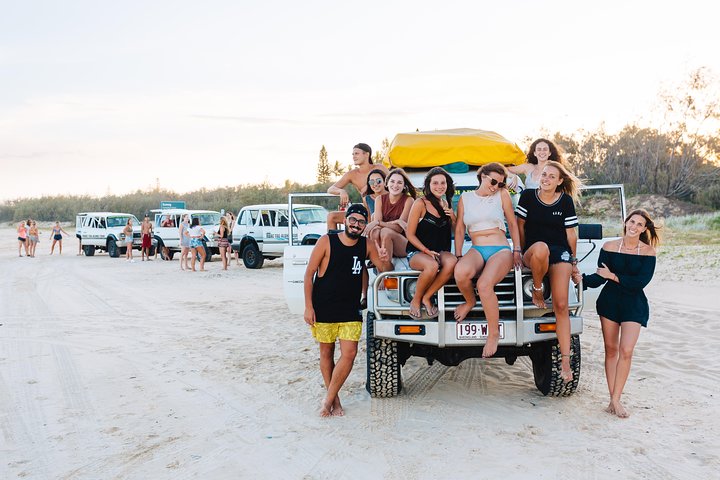
If you don't have your own 4WD, the best-value way to see the island is a tag-along tour. I've done the Dingos 3-Day Tag-Along Fraser Island 4WD Adventure twice, and it's a solid option for solo travellers and backpackers who want the full experience without the logistics. The first time I had a guide who was a marine biologist — she knew every dune, every tidal pattern, every bird call. The second time, the guide read from a script and skipped the Champagne Pools entirely. Your experience depends almost entirely on who's behind the wheel, so if you book it, cross your fingers you get one of the long-term guides.
Dingos 3-Day Tag-Along Fraser Island 4WD Adventure — A Local's Secret Pick
Three days of camping, driving, and swimming with a group of 20-30 people. The guide quality varies enormously, but when it's good, it's an incredible education in the island's ecology. Best for budget-conscious backpackers and solo travellers who want the full Fraser experience without driving themselves. Not for couples wanting privacy — you'll share a camp kitchen with strangers.
The Mistakes I Made So You Don't Have To
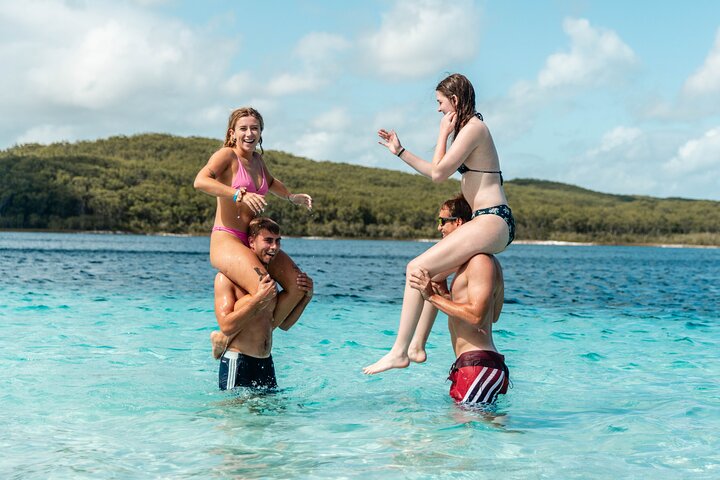
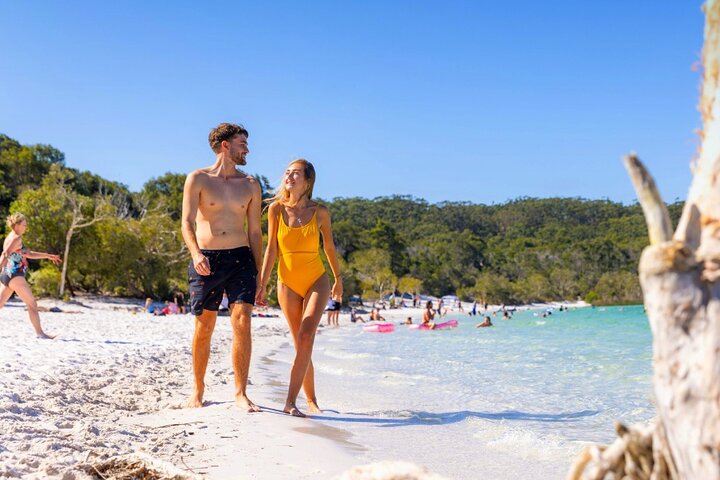
Let me tell you about my first trip to Lake McKenzie. I'd read every blog post, watched every YouTube video, and I was ready. I arrived at 11am on a Saturday in January school holidays. The shoreline looked like Bondi Beach — towels everywhere, kids screaming, someone's Bluetooth speaker blasting pop music. I sat there thinking, this is not what the photos showed. What the photos don't show is that Lake McKenzie at 7am on a Tuesday in February is a completely different place. Go early, or go in the wet season. If you can't do either, walk 200 metres along the shore from the main entry point — you'll have the place to yourself.
Another mistake: I drove the Ngkala Rocks bypass at high tide. Got bogged to the axles. A German backpacker in a rented LandCruiser pulled me out with a snatch strap he'd never used before. We both learned something that day. You cannot drive on the beach two hours either side of high tide — rangers will fine you, and the ocean will claim your vehicle if you push it. Always carry a tide chart, and drop your tyre pressure to 18psi before you hit the sand, not when you're already stuck.
And the dingoes. Mate, they're not pets. They're wild animals that patrol the campsites like they own the place — because they do. I watched a bloke at Waddy Point leave his esky open while he went for a swim. A dingo had his entire pack of sausages in under ten seconds. Fines for ignoring dingo safety rules start at $2,400. Keep your food locked in your vehicle, and never leave anything unattended.
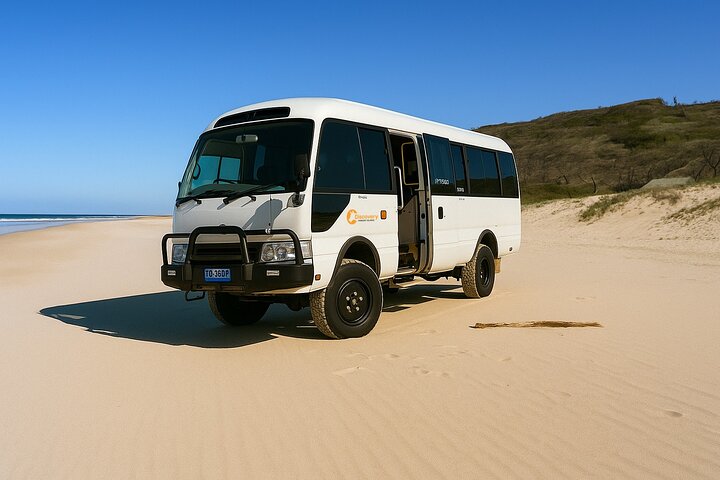
If you're time-poor or nervous about driving on sand, the Fraser Island Day Tour from Hervey Bay is the path of least resistance. A comfortable 4WD bus takes you to Lake McKenzie, Central Station, Eli Creek, and the Maheno in one packed day. It's rushed — you get about 45 minutes at each stop — but you see the highlights without the stress of driving. It's not cheap, but it's less expensive than bogging a rental 4WD in the sand.
Fraser Island Day Tour from Hervey Bay — The One Tour Locals Actually Do
A comfortable 4WD bus takes you to Lake McKenzie, Central Station, Eli Creek, and the Maheno in one packed day. It's rushed — you get about 45 minutes at each stop — but you see the highlights without driving yourself. Best for time-poor visitors, families with young kids, and anyone nervous about driving on sand. Not for photographers who need more than 45 minutes at Lake McKenzie.
Check Availability →Where to Skip and Where to Splurge
After two dozen trips, I've got strong opinions on what's worth your money and what's not. Let's start with the Champagne Pools — they're massively overrated at low tide. The water is shallow, the rocks are sharp, and you're staring at a puddle. Go at mid-to-high tide or skip them entirely. The Maheno shipwreck is the most photographed thing on the island, but it's also the most dangerous. Every year someone climbs on it ignoring the signs, and every year someone gets hurt. Stand back, use a zoom lens, don't be that person.
What's worth the splurge? A good esky. Not a cheap one from the servo — a proper rotomoulded cooler that keeps ice for three days. Also, a $12 Bunnings mosquito net for your tent. I brought one on a December trip and it was the single best decision I made. The sandflies at Central Station in summer are relentless — bring DEET spray and mosquito coils. Don't think one is enough.
The Eurong bakery does decent pies and sausage rolls — it's your best coffee option on the eastern side. And if you're self-driving, the barge from Inskip Point is cheaper and runs more frequently than River Heads for 4WDs. Book your vehicle access permit ($55.90 for up to one month) and your camping permit through QPWS before you go. Rangers check, and fines are steep.
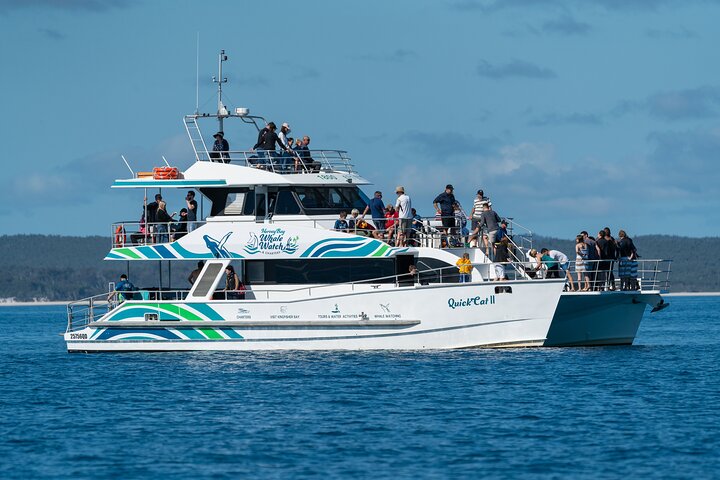
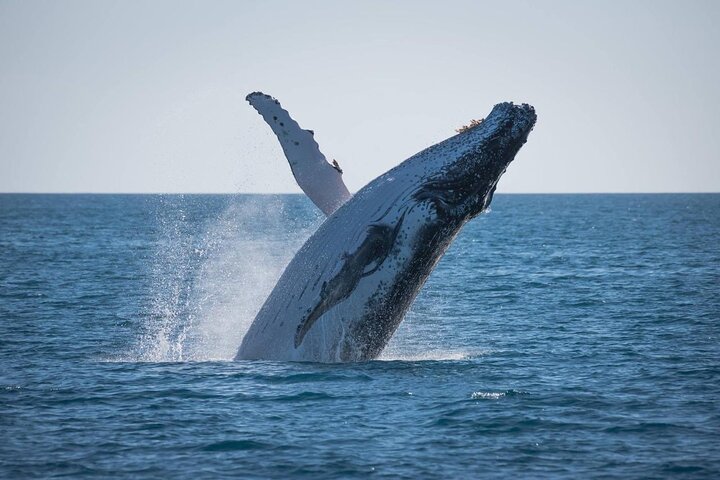
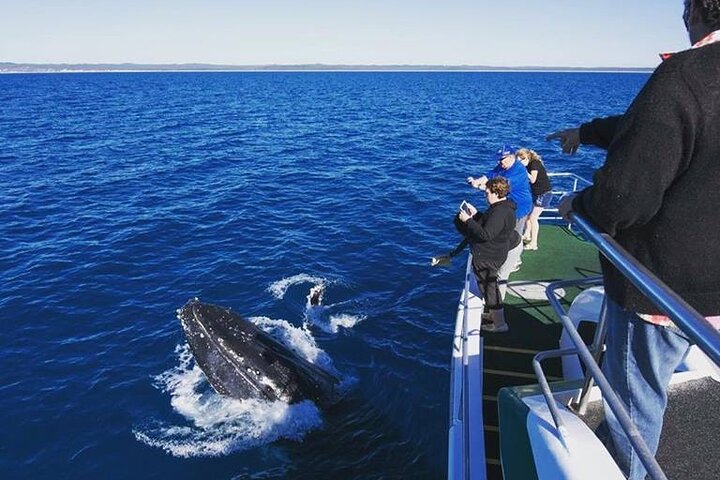
If you're visiting between July and November, a Morning or Afternoon Hervey Bay Whale Watching Cruise is worth every cent. Hervey Bay is genuinely one of the best whale-watching spots in the world — the humpbacks stop here to rest in the calm waters of the bay, and you're almost guaranteed sightings in peak season. The boat is comfortable, the crew know their stuff, and it's a nice break from sand and salt.
Morning or Afternoon Hervey Bay Whale Watching Cruise
Half-day whale watch from Hervey Bay during the July-November season. The boat is comfortable, the crew know their stuff, and Hervey Bay is genuinely one of the best whale-watching spots in the world. You're almost guaranteed sightings in peak season. Best for whale watchers, families, and anyone visiting between July and November.
Check Availability →What I Wish I'd Known Before I Went
Here's the list I wish someone had handed me before my first trip:
- Book campgrounds six months ahead for school holidays. Central Station sells out within days of becoming available. If you're flexible, go in autumn (March to May) — fewer crowds, good camping weather, and the whales start passing through again from July.
- Bring more water than you think you need. I carry 5 litres per person per day. There's no tap water at most campsites, and soft sand driving dehydrates you faster than you realise.
- Download offline maps on your phone before you go. Google Maps doesn't have the inland tracks, and you don't want to be navigating by instinct when the sun's going down.
- Rubbish facilities are limited — plan to carry out everything you carry in. I bring a dedicated rubbish bag and tie it to my roof rack out of dingo reach.
- December to February is wet season — expect afternoon storms, high humidity, and more road washouts. The island is still beautiful, but you'll spend more time waiting for tracks to dry out. Check the weather page before you go.
- Don't skip Lake Wabby. It's worth the 40-minute walk from the beach entrance, but check dingo activity first. The ranger station at Eurong can tell you what's been spotted.
- Fuel consumption doubles on soft sand. A tank that gets you 500km on the highway will get you maybe 250km on 75 Mile Beach. Fill up in Rainbow Beach or Hervey Bay before the barge.
For more detailed planning, check out our complete camping guide, the 4WD requirements page, and the best time to visit guide.
Explore More
Related comparisons and guides: